Posted on

Quick Wire Cut

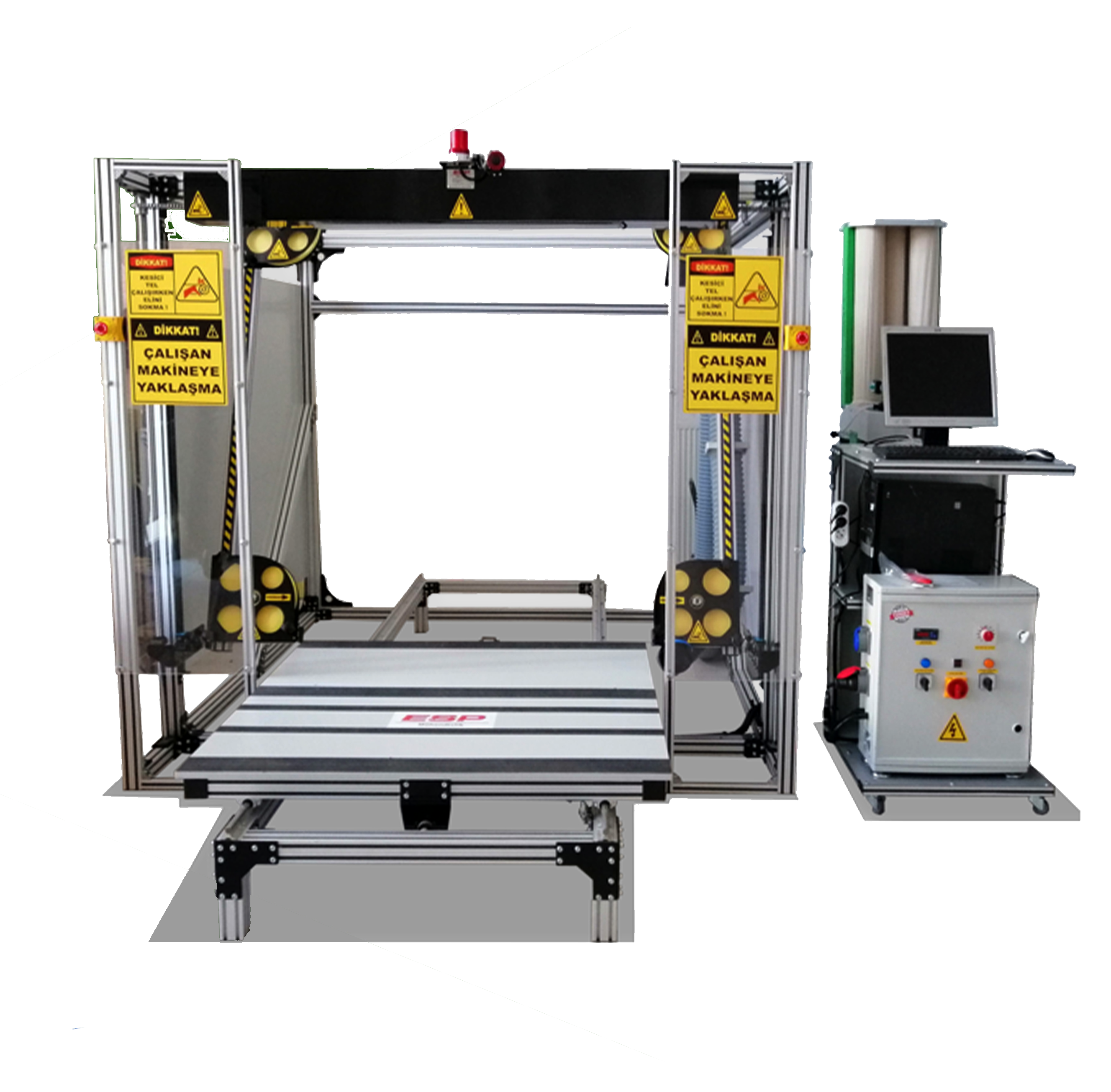
Fast wire cnc cutting machine

What is Quick Wire Cutting?

Thanks to computer-aided CNC cutting machines, Fast Wire Cutting makes it possible to make precise shaping on the cut material and obtain smoother surfaces by moving the cutting wire very quickly. Fast Wire technology, combined with the processing power of CNC machines, extracts the desired product shape from the material blocks in the most professional way. The wires used in this process are called fast cutting wire, and the machines are called Fast Wire CNC Cutting Machines.

Which Products Can Be Cut Wire Fast?

Rock wool, Polyurethane (PU), glass wool, sponge, ytong and marble materials, as well as many different materials according to the usage area, can be cut with Fast Wire Cutting technology. Cutting of these materials, including cylindrical shapes required for processes such as rock wool pipe insulation, can be carried out with the most precise settings.

What is the Difference Between Fast Wire Cutting and Hot Wire Cutting?

Fast wire cutting works on the principle that the cutting wire moves very quickly and turns into a very precise moving saw. Hot wire cutting, on the other hand, is based on the principle of shaping and cutting the surface by heating the cutting wire and raising it to high temperatures.

Quick Cutting Wire Material and Usage

As ESP Engineering, we produce cutting wires with different properties used in fast wire cutting. PUR – Polyurethane Cutting Wire used in polyurethane cutting, WOOL – Rock Wool Cutting Wire for Rock Wool Cutting and SPONGE – Sponge Cutting Wire used in sponge cutting each have customized surfaces and properties according to the materials.

Since the Cutting Wires are in direct contact with the surface during cutting, abrasions may occur due to time-based friction force. For this reason, you should not neglect to renew the wires of your CNC cutting machines within their service life in terms of occupational safety.

Fast Wire Technology Technical Details

You can take a look at the machine specification pages to get more detailed information about fast wire cutting and to discover Fast Wire Cutting Machines.

Fast Wire CNC Cutting Machines

Fast wire cnc cutting machine
Fast Wire CNC Cutting Machine
Double Speed Wire CNC Cutting Machine
FAST WIRE XL CNC CUTTING MACHINE
Fast Wire XL CNC Cutting Machine
DOUBLE SPEED WIRE ROCK WOOL CUTTING MACHINE
Double Speed Wire Rock Wool Cutting Machine

Fast Wire Manual Machines

Fast wire horizontal cutting machine
Manual Fast Wire Horizontal Cutting Machine
Fast Wire Horizontal Slicing Machine
Rock Wool and Glass Wool Slicing Machine

Upright Manual Fast Wire Cutting Machine

Quick Cut Wires

POLYURETHANE CUTTING WIRE
PUR – Polyurethane Cutting Wire
ROCK WOOL CUTTING WIRE
WOOL – Rock Wool Cutting Wire
SPONGE CUTTING WIRE
SPONGE – Sponge Cutting Wire
Posted on

What is Styrofoam?

It is a synthetic material made from crude oil. The oil is obtained by rolling the portion of styrofoam, and during its refining it is formed in the form of small balls. As a result of injecting steam into these balls, the balls swell in topology and stick to each other. This material can be used for insulation purposes or as a packaging material.

It is a type of material used to provide insulation between two brick walls, between the attic and on interior walls when necessary.
In packaging, it protects valuable tools, especially electronics and white goods, or glass, ceramics, etc.

Styrofoam Usage areas:

We know that EPS (Styrofoam) is an extremely healthy, harmless, easy-to-shape, lightweight, almost non-burdensome product on our structures, and low weight in transportation, but let’s examine its other features as well.

If we consider it in terms of health, we can say that white styrofoam is a scientifically proven product in terms of health and hygiene, in which other types of packaging such as cups, plates, medical equipment protectors, etc. are also used in these areas.

If we consider it in terms of structure, we are one of the leading advocates of its use in buildings, although there is no harm in buildings. Although the thickness and density of white Styrofoam, that is, EPS, is also important, there is unlimited use in insulation and decoration.

  1. White Styrofoam (EPS)
  2. B1 CLASS Styrofoam
  3. Hollow Styrofoam
  4. Neopor Carbon Reinforced Styrofoam

Styrofoam DENSITY: (density kg/m³)

Styrofoam is produced in desired densities according to the area of use. Since its properties can be changed intensively in the desired direction, it does not cause material waste and unnecessary cost increases. For thermal insulation purposes, it is generally used at densities of 15–30 kg/m3; It is also produced in densities of 20-100 kg/m3 for use as packaging material. As a finished product, Styrofoam also has properties such as lightness, easy workability and usability in the manufacture of composite products with other materials. It is possible to perform EPS Styrofoam Cutting in the most professional way with ESP Engineering Fast Wire CNC Cutting machines and Fast Wire Manual Cutting Machines.

Posted on

What is Rock Wool?

The state of volcanic rocks, especially Basalt, which is melted at high temperatures and gained the feature of building material, is called rock wool. Rock wool is often used as an insulating material on the exteriors of buildings.

Due to its rock wool content, it is also very advantageous as it is resistant to fire. Therefore, it is a building material that is frequently used in the construction industry. Rock wool is a material that can be used for both heat and sound insulation.

Volcanic rocks are melted at about 1400-1600 degrees. Stone wool is obtained by converting it into fiber. There is around 97% fiber in rock wool. They are the most preferred materials as thermal insulation material. Basalt, which is in the form of fibers, is pressed in different ways and produced as pipes, mattresses and sheets.

Where Is Rock Wool Used?

Rock wool can be used in many areas.

For the purpose of furnace insulation,

In electrical appliances

In the construction of roofs

To provide insulation in steel doors

For insulation purposes on exterior facades

It can be used for wall partitioning operations.

Apart from these areas, it is used for different purposes. Recently, the use of rock wool in greenhouse cultivation and organic agriculture has attracted attention. The reason for this is that stone wool is water-retaining and breathable. Due to their properties, the products obtained are also of high quality. In addition, it is also used to save heat.

Rock wool is most often used for insulation and sheathing of buildings. To use it as an insulating material, it is necessary to cut and shape rock wool. ESP Engineering offers the most professional rock wool forming solutions with Fast Wire CNC Cutting Machines.

Posted on

What is Polyurethane Material?

Polyurethane is a polymer consisting of a chain of organic units joined by carbamate links. They are used to make flexible and rigid foams, durable elastomers and high-performance adhesives, synthetic fibers, gaskets, underside of carpets and rigid plastics.

Flexible polyurethane foams are also known as polyurethane foams and are indispensable as a comfort material in beds and furniture. Non-stretching foams, on the other hand, are mostly used for heat and sound insulation. Polyurethane products are often also called urethanes. However, it should not be confused with the special urethane substance, also known as ethyl carbamate. Polyurethanes are not made of ethyl carbamate and do not contain it.

Polyurethane Material in History

It was first synthesized by the German scientist Otto Bayer in 1937 and was obtained by the reaction of diisocyanate with diol.

If there is also water in the environment, some of the diisocyanate polymerizes with diol, while a small part of it reacts with water to form a porous polyurethane structure (foam or sponge structure) by reacting with gas (carbon dioxide). At the end of the maturation period (24-72 hours), a very solid polymer structure is obtained. Later, diols were replaced by polyether or polyester polyols with larger molecular weights. The polyurethane formed in this way forms a stronger and more flexible elastomer.